
Organic Agriculture Policy — copy
Organic is an industry, a community, and a movement. Continuing to grow each year exponentially, the market reached sales of $76.6 billion in 2025, with an annual growth rate of 6.8 percent. This growth provides an opportunity for farmers to prosper at a sustainable scale while delivering healthy food to their communities. However, we must continue to advocate for a strong, trusted organic label.
The Ohio Ecological Food and Farm Association (OEFFA) is in a uniquely advantageous position when it comes to organic agriculture. We are an accredited organic certifier by the U.S. Department of Agriculture (USDA), and we also have the staff and expertise to advocate for improved organic measures through our policy program.
OEFFA Certification (one of the country’s oldest and largest organic certification agencies) certifies nearly 1,200 organic farms and operations annually. Additionally, the almost 24,000 certified organic operations across the U.S are supported through policy wins achieved by our national partners like the National Organic Coalition, Organic Farmers Association, National Sustainable Agriculture Coalition (NSAC), Real Organic Project, Organic Farming Research Foundation, and many others to help maintain and improve the integrity of organic agriculture.
Most importantly, the organic movement includes you! Since OEFFA’s founding, our members have been leaders in shaping organic agriculture policy and creating and improving the federal organic standards. We invite you to take a look at our resources below and join us to help you make your voice heard.
Organic Agriculture Fosters Ecological Balance
Organic agriculture provides a multitude of benefits to farmers, farm workers, our communities, and our natural world. It is a time-tested, scientifically supported, whole-farm approach to agriculture that centers ecological diversity, soil fertility, and natural systems. It respects and enhances the health of the land, people, and natural world—all of which have intrinsic value.
Farmers who use organic and sustainable practices are stewards for future generations. What’s more, organic agriculture both decreases greenhouse gas emissions and increases crop resilience to droughts and extreme weather.
At the same time, organic is the most well-regulated ecological label available on the market today. Rigorous national standards ensure transparency and accountability.

Standing Up for the Integrity of the Organic Label
The Organic Foods Production Act of 1990 created a National Organic Program (NOP) within the USDA that provides a consistent framework and third-party certification system for products labeled “organic.”
The national organic standards are built on the shoulders of Indigenous practices and informed by decades of farmer experience.
Maintaining the integrity of the organic label involves ongoing work. The National Organic Standards Board (NOSB) was created to provide independent oversight of the NOP. The NOSB makes recommendations on the production, handling, and processing of organic products.
The NOSB accepts comments from the organic community twice each year (see ours linked below). Your voice is important to maintain a strong organic program that consumers can trust.
OEFFA helps farmers attend NOSB meetings and provide comments to the board during webinars and in writing. In addition, we encourage farmers to send us their input, which we can include in OEFFA’s comments to the NOSB.
When the NOSB hears directly from farmers, they listen. Join our Organic Caucus to be part of the movement!
Investing in Organic Agriculture and Climate Solutions
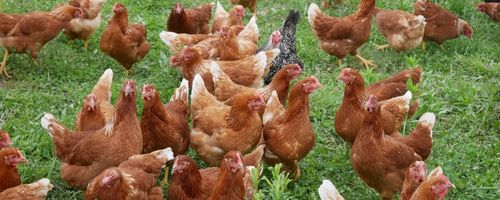
Farmer and consumer interest in this voluntary, market-based certification is growing across the country despite organic and transitioning producers receiving minimal support from state and federal agriculture programs and land-grant universities.
Through advocacy, we, along with our national partners, have worked toward improved organic programs and standards, like Organic Certification Cost Share, the Organic Livestock and Poultry Standards, and Strengthening Organic Enforcement.
Key research programs at the Economic Research Service, the Agricultural Research Service, and the National Institute of Food and Agriculture need and deserve continued funding to show the return on investment organic operations offer for environmental health and farmers’ bottom lines.
Likewise, OEFFA members advocate for more dedicated Extension staff trained in organic, as well as mentorship programs to support producers transitioning to organic. Through participation in the recent Transition to Organic Partnership Program (TOPP), OEFFA has supported 11 mentor pairs, helping to secure more organic operations in the future.
Soil is the Foundation of Organic
Soil is the basis of organic farming systems. Healthy soils are key to biodiversity, nutrient-rich foods, and climate resilience. OEFFA and other soil-based certification organizations have developed a position statement about how Organic Agriculture is Soil Based.

Organic Voices
OEFFA’s Grain Growers Chapter and other members are the heart of the movement and our grassroots organic agriculture policy work. Contact us to learn more about how you can join the farmers below in being a strong voice for organic!
Jim Jacobs
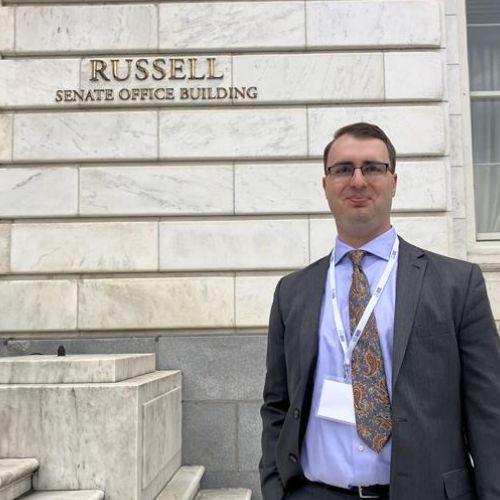
Organic producers, like Jim Jacobs, use innovative production methods to steward the land. Jim takes time to advocate with us in DC and educate his fellow farmers about his organic farming practices.

Scott Myers
Organic farmers, like Scott Myers, are calling for climate change solutions. He has led OEFFA conference workshops, spoken with the media, and hosted on-farm soil health events highlighting practices that sequester carbon.
Kristy Buskirk
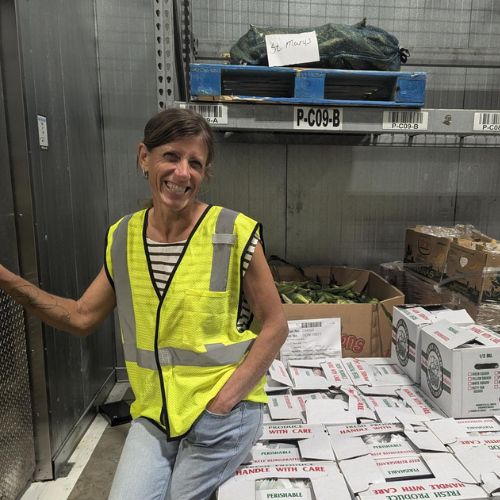
Deeply focused on soil health, farmers like Kristy Buskirk (pictured left) have been taking strides to provide local healthy food to their communities, starting with farming practices that promote healthy soil.

- OEFFA Resource: Organic Agriculture Impact Mitigation Plan
This OEFFA tool will help you navigate the development of energy infrastructure on your farm so you can protect your organic integrity throughout this process. OEFFA also offers free technical assistance for organic farmers facing pipeline easements and other energy impacts. Contact OEFFA for assistance.
- OEFFA Guide: How to Provide Comments to the National Organic Standards Board
This OEFFA tool provides templates and tips for submitting written comments online and oral comments in person or through Zoom to the National Organic Standards Board.
- OEFFA Organic Videos
OEFFA's YouTube channel features more than a dozen videos on organic transition, organic production standards, organic research, and crop insurance for organic producers.
- National Organic Program News
Find National Organic Program news, resources, and information about regulations and enforcement.
- National Organic Standards Board News
Find information about the National Organic Standards Board, including their work agenda, recommendations, upcoming meetings, and comment information.
- OEFFA Report: Highlights from the 2016 Certified Organic Survey: Ohio in Context
Read OEFFA's analysis of the USDA's 2016 Census of Organic Agriculture, highlighting Ohio.
- NRDC Report: Grow Organic: The Climate, Health, and Economic Case for Expanding Organic Agriculture
This Natural Resources Defense Council report describes the many benefits of organic agriculture.
- Friends of the Earth Report: Swarming the Aisles: Rating Top Retailers on Bee-Friendly and Organic Food
Friends of the Earth’s retailer scorecard benchmarks 25 of the largest U.S. grocery stores on pesticides and pollinator health.
- Friends of the Earth Report: Toxic Secret
Friends of the Earth reveal their results from testing food found at top retailers for toxic pesticide residues.
- OEFFA’s NOSB Comments – Fall 2026
- OEFFA’s Comments on AMS-NOP-22-0029 Rulemaking
- OEFFA’s NOSB Comments – Spring 2026
- OEFFA’s NOSB Comments – Fall 2025
- OEFFA’s NOSB Comments – Spring 2025
- OEFFA’s NOSB Comments – Mushrooms and Pet Food
- OEFFA’s NOSB Comments – Spring 2024
- OEFFA’s NOSB Comments – Fall 2023
- OEFFA’s NOSB Comments – Spring 2023
- OEFFA’s NOSB Comments – Fall 2022
- OEFFA’s NOSB Comments – Spring 2022
- OEFFA’s NOSB Comments – Fall 2021
- OEFFA’s NOSB Comments – Spring 2021
- OEFFA’s NOSB Comments – Fall 2020
- OEFFA’s NOSB Comments – Spring 2020
- OEFFA’s NOSB Comments – Fall 2019
- OEFFA’s NOSB Comments – Spring 2019
- OEFFA’s NOSB Comments – Fall 2018
- OEFFA’s NOSB Comments – Spring 2018
- OEFFA’s NOSB Comments – Fall 2017
- OEFFA’s NOSB Comments – Spring 2017
- OEFFA’s Comments on NIFA’s Science and Research Priorities – Fall 2022
- OEFFA’s Comments on the Proposed Organic Livestock and Poultry Practices Rule – Fall 2022
- OEFFA’s Comments on Supply Chains for the Agricultural Production – Summer 2021
- OEFFA’s Comments on the Origin of Livestock Rule – Summer 2021
- OEFFA’s Comments on Climate Change and Agriculture – Spring 2021
- OEFFA’s Comments on the Strengthening Organic Enforcement Rule – Fall 2020
- OEFFA’s Comments on Proposed GE Labeling Standards – Summer 2018
- OEFFA’s Comments on the Notice to Withdraw the Organic Livestock and Poultry Practices Rule – Winter 2017
- OEFFA’s Comments about Biotechnology Regulation Framework – Summer 2017
OLD CONTENT DELETED FROM PAGE
Organic is an industry, a community, and a movement. The organic industry, which is built by the organic community on the shoulders of the organic movement, has grown to nearly $70 billion per year. It provides an opportunity for farmers to prosper at a sustainable scale, but only as long as organic agriculture policy represents the best in sustainable production.
The organic community includes OEFFA Certification (one of the country’s oldest and largest organic certification agencies), nearly 1,200 organic farms and operations certified by OEFFA, and almost 24,000 certified organic operations across the U.S. Additionally, OEFFA partners with the National Organic Coalition, the Organic Farmers Association, the National Sustainable Agriculture Coalition (NSAC), the Real Organic Project, the Organic Farming Research Foundation, and many others to help maintain and improve the integrity of organic agriculture.
Most importantly, the organic movement includes you! Since OEFFA’s founding, our members have been leaders in shaping organic agriculture policy and creating and improving the federal organic standards. We have resources to help you make your voice heard and grow your organic business.
Quick Links:
Investing in Organic | Organic Voices | Organic Resources | Organic is Soil Based

Keep the Soil in Organic
Organic Agriculture Fosters Ecological Balance
Organic agriculture provides a multitude of benefits to farmers, farm workers, our communities, and our natural world. It is a time-tested, scientifically-supported, whole-farm approach to agriculture that centers ecological diversity, soil fertility, and natural systems. It respects and enhances the health of the land, people, and natural world, all of which have intrinsic value.
Farmers who use organic and sustainable practices are stewards for future generations. Their practices enhance soil health, improve water holding capacity and infiltration, and conserve biodiversity. What’s more, organic agriculture both decreases greenhouse gas emissions and increases crop resilience to droughts and extreme weather.
At the same time, organic is the most well-regulated ecological label available on the market today. Rigorous national standards ensure transparency and accountability.

Standing Up for the Integrity of the Organic Label
The Organic Foods Production Act of 1990 created a National Organic Program (NOP) within the U.S. Department of Agriculture (USDA) that provides a consistent framework and third-party certification system for products labeled “organic.”
The national organic standards are built on the shoulders of indigenous practices and informed by decades of farmer experience.
Nevertheless, maintaining the integrity of the organic label involves ongoing work. The National Organic Standards Board (NOSB) was created to provide independent oversight of the NOP. The NOSB makes recommendations on the production, handling, and processing of organic products.
The NOSB accepts comments from the organic community twice each year and your voice is important to maintain a strong organic program that consumers can trust.
OEFFA helps farmers attend NOSB meetings and provide comments to the board during webinars and in writing. In addition, we encourage farmers to send us their input, which we can include in OEFFA’s comments to the NOSB.
When the NOSB hears directly from farmers, they listen. Contact us to be part of the movement!

Investing in Organic Agriculture and Climate Solutions
Farmer and consumer interest in this voluntary, market-based option is growing across the country despite organic and transitioning producers receiving minimal support from state and federal agriculture programs and land grant universities.
Organic research coupled with strong Extension services supports good farming practices that help ALL growers increase profitability, protect our environment, and support healthy communities.
For our food security, we must also invest in research on organic’s potential to aid in climate change mitigation and adaptation.
Key research programs include the Economic Research Service, the Agricultural Research Service, and the National Institute of Food and Agriculture (NIFA).
Likewise, OEFFA members also advocate for transition mentorship programs and increasing the number of dedicated Extension staff trained in organic.
Finally, the organic movement supports paying farmers who implement sustainable practices that help create a more resilient agriculture system.
Soil is the Foundation of Organic
Soil is the basis of organic farming systems. Healthy soils are key to biodiversity, nutrient-rich foods, and climate resilience. OEFFA and other soil-based certification organizations have developed a position statement about how Organic Agriculture is Soil Based.
Organic Voices
OEFFA’s Grain Growers Chapter and other members are the heart of the movement and our grassroots organic agriculture policy work. Contact us to learn more about how you can join the farmers below in being a strong voice for organic!

Angela Schriver
Organic grain farmers, like Angela Schriver, are active in providing comments to the NOSB. Angela has spoken about the need to get tough on fraudulent organic imports by implementing a long-awaited Strengthening Organic Enforcement rule.
Scott Myers
Organic farmers, like Scott Myers, are calling for climate change solutions. He has led OEFFA conference workshops, spoken with the media, and hosted on-farm soil health events highlighting practices that sequester carbon.

Abbe Turner
Local food business owner Abbe Turner has spoken about the need to invest in research programs, like ATTRA and the Sustainable Agriculture Research and Education (SARE) program, which help support organic and small-scale farmers.
- OEFFA Resource: Organic Agriculture Impact Mitigation Plan
This OEFFA tool will help you navigate the development of energy infrastructure on your farm so you can protect your organic integrity throughout this process. OEFFA also offers free technical assistance for organic farmers facing pipeline easements and other energy impacts. Contact OEFFA for assistance.
- OEFFA Guide: How to Provide Comments to the National Organic Standards Board
This OEFFA tool provides templates and tips for submitting written comments online and oral comments in person or through Zoom to the National Organic Standards Board.
- OEFFA Organic Videos
OEFFA's YouTube channel features more than a dozen videos on organic transition, organic production standards, organic research, and crop insurance for organic producers.
- National Organic Program News
Find National Organic Program news, resources, and information about regulations and enforcement.
- National Organic Standards Board News
Find information about the National Organic Standards Board, including their work agenda, recommendations, upcoming meetings, and comment information.
- OEFFA Report: Highlights from the 2016 Certified Organic Survey: Ohio in Context
Read OEFFA's analysis of the USDA's 2016 Census of Organic Agriculture, highlighting Ohio.
- NRDC Report: Grow Organic: The Climate, Health, and Economic Case for Expanding Organic Agriculture
This Natural Resources Defense Council report describes the many benefits of organic agriculture.
- Friends of the Earth Report: Swarming the Aisles: Rating Top Retailers on Bee-Friendly and Organic Food
Friends of the Earth’s retailer scorecard benchmarks 25 of the largest U.S. grocery stores on pesticides and pollinator health.
- Friends of the Earth Report: Toxic Secret
Friends of the Earth reveal their results from testing food found at top retailers for toxic pesticide residues.
- OEFFA’s NOSB Comments – Fall 2026
- OEFFA’s Comments on AMS-NOP-22-0029 Rulemaking
- OEFFA’s NOSB Comments – Spring 2026
- OEFFA’s NOSB Comments – Fall 2025
- OEFFA’s NOSB Comments – Spring 2025
- OEFFA’s NOSB Comments – Mushrooms and Pet Food
- OEFFA’s NOSB Comments – Spring 2024
- OEFFA’s NOSB Comments – Fall 2023
- OEFFA’s NOSB Comments – Spring 2023
- OEFFA’s NOSB Comments – Fall 2022
- OEFFA’s NOSB Comments – Spring 2022
- OEFFA’s NOSB Comments – Fall 2021
- OEFFA’s NOSB Comments – Spring 2021
- OEFFA’s NOSB Comments – Fall 2020
- OEFFA’s NOSB Comments – Spring 2020
- OEFFA’s NOSB Comments – Fall 2019
- OEFFA’s NOSB Comments – Spring 2019
- OEFFA’s NOSB Comments – Fall 2018
- OEFFA’s NOSB Comments – Spring 2018
- OEFFA’s NOSB Comments – Fall 2017
- OEFFA’s NOSB Comments – Spring 2017
- OEFFA’s Comments on NIFA’s Science and Research Priorities – Fall 2022
- OEFFA’s Comments on the Proposed Organic Livestock and Poultry Practices Rule – Fall 2022
- OEFFA’s Comments on Supply Chains for the Agricultural Production – Summer 2021
- OEFFA’s Comments on the Origin of Livestock Rule – Summer 2021
- OEFFA’s Comments on Climate Change and Agriculture – Spring 2021
- OEFFA’s Comments on the Strengthening Organic Enforcement Rule – Fall 2020
- OEFFA’s Comments on Proposed GE Labeling Standards – Summer 2018
- OEFFA’s Comments on the Notice to Withdraw the Organic Livestock and Poultry Practices Rule – Winter 2017
- OEFFA’s Comments about Biotechnology Regulation Framework – Summer 2017

Ohio Ecological Food and Farm Association
NEW ADDRESS
150 E. Wilson Bridge Rd. Suite 230
Worthington, OH 43085
 oeffa
oeffa oeffa
oeffa org
orgOEFFA:(614) 421-2022 (614) 421-2022
OEFFA Certification:(614) 262-2022 (614) 262-2022
Fax:(614) 421-2011 (614) 421-2011