
Connecting Federal Nutrition Dollars to Local Farmers
The farm bill is a massive piece of legislation that encompasses policies covering agriculture, conservation, trade, rural development, nutrition, and more. The current legislative package differs from the first farm bill, the Agricultural Adjustment Act of 1933, which was passed almost 100 years ago. At that time, farmers were dealing with repercussions from World War I and the Great Depression’s impact on crop prices. As such, the inaugural farm bill included farmer support and commodity price controls that we continue to see in the legislation.
Fast forward to the 1960s, when President Lyndon B. Johnson spearheaded ambitious policy initiatives, programs, and legislation laid out for his “Great Society” agenda. Issues like inequality, poverty, and hunger took center stage for the Johnson administration. Medicaid and Medicare became law, the Job Corps program was created, and the Food Stamp Act was established—which would create the cornerstone link between agriculture and nutrition programs in the farm bill.
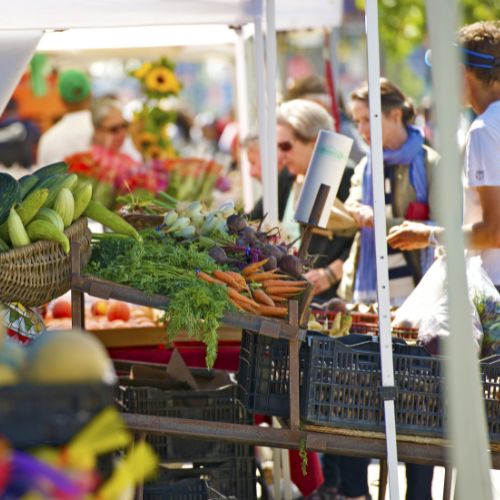
Offering Nutrition a Seat at the Table
The Agricultural and Consumer Protection Act of 1973 was the first farm bill to include a Nutrition Title and its food assistance programs, officially making it an omnibus bill: one that covers a wide set of topics involving a wide range of stakeholders.
Nutrition programs that are often reauthorized in the farm bill include:
- Supplemental Nutrition Assistance Program (SNAP): Provides food benefits (formerly called “food stamps”) to help supplement low-income households’ grocery budgets
- The Emergency Food Assistance Program (TEFAP): Provides no-cost emergency food assistance with American-grown USDA foods (initially designed to help reduce agricultural surpluses)
- Commodity Supplemental Food Program (CSFP): Provides a free monthly box of USDA food for low-income older adults (ages 60+)
- Community Food Projects: Grants for projects that promote self-sufficiency and increase food security in low-income communities
- Senior Farmers’ Market Nutrition Program (SFMNP): Provides low-income older adults with coupons to purchase eligible foods at farmers’ markets and through community supported agriculture (CSA) programs
- Gus Schumacher Nutrition Assistance Program (GusNIP): Grants for projects that help low-income eaters increase their purchasing power when buying produce from retailers like farmers’ markets
The Often-Unseen Link Between Nutrition Programs and Agriculture
The farm bill’s breadth of policies and interested parties brings about both obstacles and opportunities. Since the 1960s, nutrition and farming communities have had to work together to pass this major legislation, and their cooperation is vital to the bill’s reauthorization.
These dynamics have brought continued difficulty, including last year’s passage of H.R. 1, the One Big Beautiful Bill Act, which siphoned approximately $187 billion from SNAP to fund agricultural subsidies, crop insurance, and commodity programs. It was very unusual for farm bill programs to be included, and this was the largest cut to SNAP in history, which has prompted much of the current debate on the farm bill, along with some mixed signals as to how nutrition and farming communities rely on each other.
Many Nutrition Dollars End Up in the Hands of Producers
It is often overlooked that nutrition programs benefit America’s farming producers, not just the folks needing support accessing food. Like members of Congress who write the farm bill, nutrition and farming communities also work together to provide for each other.
“I’ve had the privilege of working alongside local farmers for most of my career,” shared Senior Director, Food Supply Chain of the Ohio Association of Foodbanks, Carrie Harshbarger. “Whether I’m speaking with a beginning urban grower in one of Ohio’s cities or a fifth-generation farmer in a rural community, I’m always struck by the shared commitment to feeding their neighbors. While every farm is unique, that common purpose is what makes Ohio’s local food system so strong—and it’s why programs that connect more families with locally grown food matter for both our communities and our farmers.”
Beyond providing a helping hand to those in need, these nutrition dollars also support regional economies. The USDA has established SNAP as an economic multiplier. “Research shows each SNAP dollar has up to a $1.80 impact on local economies, fueling jobs and economic growth for local farmers and retailers,” continued Harshbarger. “Beyond the direct sales to these businesses, the revenue generated from these sales contributes to local taxes that fund basic services and infrastructure.”
Impact in Ohio
More than 10,000 Ohio retailers accept SNAP benefits, which generate roughly $4.9 billion in total economic impact each year. Some of these Ohio retailers include the 112 farmers’ markets that accept SNAP benefits. In 2020, SNAP benefits brought in $446,360 to Ohio farmers’ and farm markets.
Alex Dragovich of Mud Run Farm shared that his farm is too small to receive federal agricultural subsidies, but it can still benefit from government support indirectly, like through SNAP purchases at the farmers’ market. Direct-to-consumer buying is the market for them, and “most farmers’ markets give out coins for people to pay for specific items on the list,” shared Dragovich, referring to Ohio’s Produce Perks program.
While Mud Run Farm’s grain and flour are not eligible for Produce Perks, which provides a $1 match on SNAP/EBT purchases of fruits and vegetables at farmers’ markets, many farmers do benefit from the program. Produce Perks is funded by GusNIP, the federal grant program that supports SNAP-receiving consumers in affording fresh produce. Between September 1, 2023, and August 31, 2024, GusNIP helped American families purchase more than $54 million of fruits and vegetables, generating more than $112 million in economic impact.
The Current Situation
Federal nutrition programs not only support increased consumption of nutritious foods, but they also strengthen our local food systems, help our farming neighbors, and keep money circulating in our local communities. But right now, things are looking a little different, and impacts are starting to be felt locally.
“Nutrition programs that connect local farmers to social services have direct impacts,” shared Ohio Farmers Market Network Board President Andrew Rome. “Fewer customers are using SNAP benefits at farmers markets and fewer of those dollars are being spent with local farmers and food producers.”
Mark Van Fleet, farmer and owner of Harriet Gardens, explained that there have been reductions in sales over time through programs like Produce Perks and the Seniors Farmers’ Market Nutrition Program, but “every little bit helps.”
With the historic decline in available SNAP funds, less ends up in farmers’ hands. Between July 2025 and March 2026, the number of nationwide SNAP recipients fell by more than 4 million people. As a result of the continued impact of these cuts, farmers could stand to lose $24 billion in missed revenue over the next decade.
Future Outlook
Shortly after taking office, U.S. Secretary of Agriculture Brooke Rollins acknowledged the “critical” mission of the USDA’s 16 nutrition programs. She also maintained a commitment to “create new opportunities to connect America’s farmers to nutrition assistance programs.” And for good reason—nutrition programs have long benefitted American farmers, even in times of crisis.
Farmers are often on the frontlines of crises, and issues like tariffs, climate change, and unstable markets take their toll on America’s producers. But federal programs can help. When we connect the dots, we can see that nutrition dollars can end up supporting a farmer’s bottom line while connecting our neighbors with fresh, local food.
The farm bill is a testament to what happens when everyone has a seat at the table. Since the cornerstone linkage between farm and nutrition programs began in the 1960s, communities with diverse interests have come together to reauthorize 12 farm bills. Federal nutrition programs demonstrate how nutrition and farm communities work together in policy and on the ground. The next farm bill provides an opportunity to bridge goals, build coalitions, and come together around the programs that support eaters and farmers alike.