
Connecting with Candidates: A Guide for Ohio’s Food and Farm Community
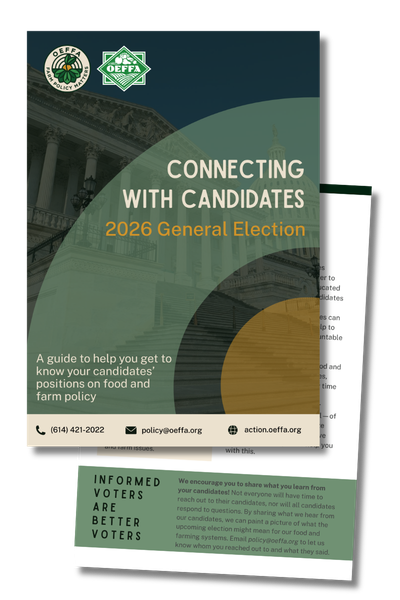
The 2026 General Election is just 48 days away, and now is an important time to engage with the candidates and elected officials who will shape policies affecting Ohio’s food and farm systems.
Voting is one way to participate in our democracy, but engagement can take many forms—including learning where candidates stand on issues that matter to you, asking questions, and sharing your experiences as a farmer, food producer, consumer, or community member.
The Ohio Ecological Food and Farm Association (OEFFA) community represents people with many different perspectives. What brings us together is a shared interest in understanding how policymakers can support strong, resilient local and regional food systems.
A Nonpartisan Resource for Engaging Candidates
Like other 501(c)(3) organizations, OEFFA is strictly nonpartisan. We do not endorse or oppose candidates for public office, and there are limits on what we can do during election season when engaging with candidates.
We can, however, provide resources to help our community learn more about candidates’ positions on food and farm issues. That’s the purpose of our new Connecting with Candidates Guide. The guide is designed to help you have meaningful conversations with candidates and elected officials about the food and farm policies that matter to you. It includes 12 questions focused on policy priorities identified by the OEFFA community, including:
- Local and regional food systems
- Farm and farmer viability
- Marketplace fairness
- Climate change and environmental health
- Organic
The questions were developed in partnership with local food and farm advocates and organizations, including Ohio Ag Noire, Ohio Food Policy Network, The Garden Sage, and Ohio Farmers Market Network. We are incredibly grateful to our partners for their time, expertise, and contributions to this process.
Hearing From the Candidates
In late August, OEFFA distributed questionnaires to Ohio congressional and gubernatorial candidates. We’ll track responses as they come in, and you can view them here.
Our goal is to provide information—not to tell you how to vote. A candidate’s fitness for office should be judged by a variety of qualifications that go beyond the guide’s questions. We encourage you to review candidates’ responses alongside other information about their positions, records, and priorities, and decide what matters most to you.
Make the Questions Your Own
The Connecting with Candidates Guide is more than a list of questions. It also includes definitions and information about relevant programs and policies to help you personalize your conversations with candidates. You can adapt the questions to reflect the needs of your community or the level of government you’re engaging with.
For example, a farmer might ask a candidate about a USDA program they have used or about barriers they’ve encountered in accessing farm support. A consumer might share their experience finding locally grown food and ask what policies could help expand access. Community members can also raise issues specific to their county, city, or region.
We encourage you to use the guide when engaging with candidates for all levels of government—including federal, state, county, city, and other local offices. Policymakers at each level can influence the food and farm systems in our communities.
Connect With Candidates in Your Community
As Election Day approaches, incumbent (current) members of Congress and the Ohio General Assembly will spend time in their districts. This can create opportunities to attend town halls, community events, and other gatherings where you can ask questions directly.
We suggest that you follow your elected officials and candidates on social media or sign up for their email updates to learn about upcoming events. If you don’t have time for an in-person meeting, page four of the Connecting with Candidates Guide includes information about identifying your candidates and finding other ways to contact them.
Stay Engaged This Election Season
As you use the Connecting with Candidates Guide, we’d love to hear about your experience. Have a question about engaging with candidates? Did a candidate respond to one of the questions? Do you have feedback about the guide or ideas for future resources? Reach out to us at policy@oeffa.org.
The 2026 General Election is Tuesday, November 3—and we encourage you to get out to vote! Ohio’s official election calendar lists October 5 as the voter-registration deadline, while early in-person and absentee voting begin on October 6. We encourage you to learn about the candidates and issues on your ballot, engage with your community, and make a plan to vote.
Thank you for taking the time to learn about the issues that matter to you and for helping educate your community about food and farm policy.