
The Midterm Election and What It Means for Food and Farm Policy
Like any election, this month’s midterm election will shape the future of food and farm policy. Ohio, like many states, saw a lot of R-to-D flipped seats, and this so-called ‘blue wave’ means a shift to Democratic control of the federal House and Senate, an end to the Republican supermajority in the Ohio General Assembly, and a Democratic Governor in Ohio–the first in 15 years. The shift will bring about changes in the composition of agriculture committees, and new priorities around nutrition spending, trade relations, conservation, and agriculture policy as a whole.
Even before the 120th Congress, the 137th Ohio General Assembly, and the new Ohio Governor take office in January, the impacts of the election may guide current members of the state and federal legislature’s actions in this period of lame duck.
In Congress, upcoming changes in both chambers may push legislators in different directions on the fiscal year 2027 spending, farmer assistance, and, of course, the farm bill. Even while in recess, the House and Senate have continued work behind the scenes toward a new farm bill.
We are hopeful that the midterm election results will impact the policy landscape in a way that meets the needs of those in our community. Producers continue to face volatile weather, changes in funding and agency staffing, and heightened geopolitical uncertainty. They need and deserve policies to support them as they feed our communities and care for our shared resources.
Preparing for the Election
Some of these producer and community challenges were captured in the Candidate Questionnaires sent to Ohio’s federal and gubernatorial candidates and the accompanying Candidate Questionnaire Guide to help those in our community elevate food and farm issues at the ballot box. We are incredibly grateful to the partners who supported the development of these election resources and got the word out about these resources to their neighbors and networks.
We received responses from 10 candidates and had nearly 50 downloads of the guide before the election. Both numbers reflect a significant increase when compared with the responses and downloads of our 2024 election resources.
Congress’ Major Flip
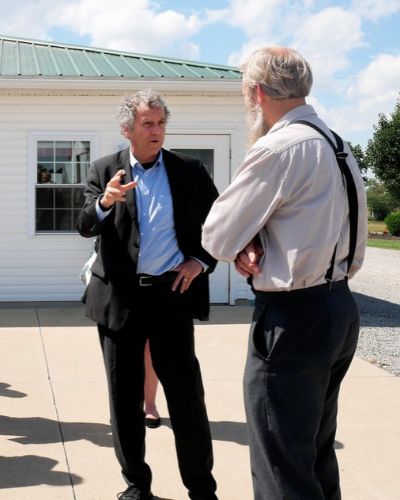
On the federal level, Ohio had some big races. First, in the Senate, former Senator Sherrod Brown won his election against incumbent Senator Jon Husted. Senator Husted was initially appointed to his position when Vice President Vance was elected alongside President Trump in 2024. Senator Brown will have to decide to run for re-election again in two years, as this was a special election to fill the rest of then-Senator Vance’s term.
Sherrod Brown previously served on the Senate Agriculture Committee, but we have yet to hear if he will go for it again. If he does, there is a chance he could be the Chair of the Committee (in the #1 majority spot) if his seniority is still acknowledged after leaving Congress for two years.
Previously, he championed 1890 land-grant programs, conservation funding, whole farm revenue protection amendments, and other priorities of ours. Sherrod Brown has also actively engaged with the OEFFA community over the years by participating in a farmer roundtable and attending the OEFFA conference.
Across Congress in Ohio, we had three seats flip. Ohio Districts 7, 10, and 15 are no longer held by Republicans and will be the only three new faces of the Ohio delegation, as all other incumbents won their races.
There are a few members of the House that we keep in close contact with because of their roles in Congress:
- Congresswoman Marcy Kaptur (the longest-serving woman in Congress) sits on the House Appropriations Committee and the Agriculture Appropriations Subcommittee
- Congressman Dave Joyce sits on the House Appropriations Committee
- Congresswoman Shontel Brown sits on the House Agriculture Committee and is currently running for Chair
- Congressman Dave Taylor sits on the House Agriculture Committee
We will not know for sure until early next year if all of these individuals will remain on these committees and what other changes with newcomers may occur. It has also been confirmed that Ohio Congressman Jim Jordan will be the House Minority Leader for the 120th Congress, so a lot of leadership roles could be held by Ohioans.
More broadly, there is unprecedented change upcoming in Congress. The House Agriculture Committee may have a dozen members leaving due to election losses and retirements. At least eight members will be leaving the Senate Agriculture Committee. We’re hearing that many new members from across the country want a seat on the Agriculture Committees, which isn’t usually what people ask for. This will be the largest incoming freshman class of House lawmakers since 1992. Across both chambers, there will be more than 100 new members of Congress, which means new opportunities—and a need to educate legislators on our member-driven priorities.
Big Changes on the State Level
The results of the midterm election signaled major changes for Ohio. Amy Acton was elected as the first female and first Democratic governor in Ohio since Ted Strickland (2007-2011), and multiple seats flipped from Republican to Democrat, notably in the Ohio House. This means the Republicans no longer hold the supermajority in the legislature. In Ohio, a supermajority holds 60+ seats in the House or 20+ seats in the Senate–a position Republicans have held in the General Assembly since 2013.
With the eight Democrats gaining seats, Republicans now hold fewer than 60 seats in the House, meaning they cannot override vetoes from Governor-elect Acton without Democrats’ support. This means we expect to see more negotiations between parties on partisan issues in the 137th General Assembly.
However, as the legislature moves into the lame-duck session, we expect to see many legislators pushing bills toward the finish line before January. In particular, with the loss of the Republican supermajority and the new Democratic governor taking office in the new year, we expect current Republican lawmakers to move highly partisan legislation from now until January.
Regarding OEFFA’s work at the Ohio Statehouse and with state agencies, the above-mentioned changes could mean some solid support and movement for food and farm policies and programs that align with our priorities. While we have always worked across the aisle in both chambers to progress policies and programs, there may be more support for our work given the potential increase in collaboration on issues between the two chambers and the governor.
Join this Movement
With all the opportunities ahead for Ohio, we need your support, advocacy, and participation more than ever. Whether you’re a seasoned advocate with the OEFFA Policy program or a curious potential participant, we need you, your stories, and your energy to shape the future of food and farm policy in 2027 and beyond.
Lauren and Nicole are currently working to shape a policy priority-setting process for the OEFFA community to reengage our members in our work in these shifting political environments. To ensure our work best serves our members going into the new Congress and Ohio General Assembly, we invite you to follow us on Instagram and sign up for our policy email list and our caucuses to stay up to date and engaged in 2027.